

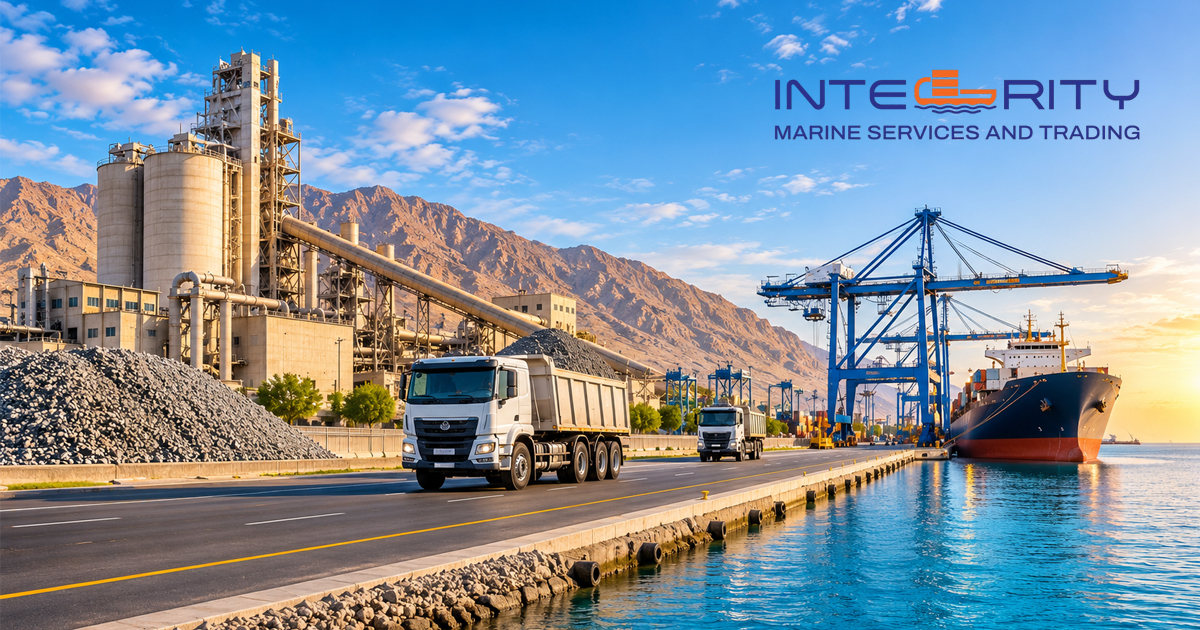
Clinker Supplier in Oman: What Actually Happens Between the Plant and the Port
Ask a cement plant manager what keeps them up at night and it’s rarely the kiln. It’s the ship. A vessel that arrives two days late, a hold that got rained on during loading, a customs officer asking for a certificate nobody printed. Clinker is a simple product, but moving it is not.
If you’re searching for a clinker supplier in Oman, this post is about the part that decides whether your deal makes money: shipping, handling and paperwork. We’ll also explain what a good marine services company in Oman should be doing for you behind the scenes.
First, a quick word on clinker
Clinker is what you get when limestone and clay are cooked in a kiln at extreme heat. It comes out as grey, marble-sized nodules. Grind it with a little gypsum and you have cement.
Plenty of grinding plants across the GCC, East Africa and South Asia don’t run their own kilns. They buy clinker and grind it locally. That makes clinker and cement supply a steady, high-volume trade, and one where a few lost days at port can wipe out the margin.
Why Oman makes sense
Oman’s biggest advantage is its position. Ports like Sohar, Salalah and Duqm sit on the Arabian Sea, outside the Strait of Hormuz, so vessels can head straight toward India, East Africa or the rest of the Gulf without a long detour. The deep-water berths handle bulk carriers comfortably, and road links let cargo continue overland into GCC markets. We’ve written about this before in our posts on Sohar Port and transit cargo in Oman.
How a clinker shipment really moves
Clinker travels as dry bulk, usually on handysize, handymax or supramax vessels. For smaller parcels, or sites without a proper deep-water berth, tug boats, barges and landing crafts can fill the gap.
It starts with choosing the right vessel for the cargo size, draft and loading window. Once she’s nominated, your shipping agency in Oman takes over the port side: booking the berth, arranging the pilot, and dealing with the port authority. Then comes loading. Good stevedoring matters more than people think, because the clinker is dusty and easy to waste if it’s handled carelessly. A draft survey confirms the quantity, the documents are issued (bill of lading, certificate of origin, quality certificates), and the ship sails. At the other end, the receiver’s agent coordinates discharge.
Where things go wrong
In our experience the problems are almost always boring ones.
Moisture. Clinker needs to stay dry. A shower during loading or a poorly sealed hold can turn into a quality claim.
Waiting time. If the berth isn’t ready or documents arrive late, the ship sits idle and demurrage starts counting. That bill gets large quickly.
Customs mistakes. A wrong HS code or a missing certificate can hold up cargo at the gate. Our customs clearance guide for Oman lists what to prepare in advance.
No plan for the last mile. Cargo that clears the port but has no trucking booked just sits there, costing you money.
Why one team beats five
Most of these problems happen in the handoffs between companies. The agent assumes the forwarder has the documents, the forwarder assumes the trucker is booked, and nobody owns the gap.
That’s why many clients prefer a single marine and logistics solutions provider in Oman. With us, the same team can handle the vessel agency, vessel husbandry (crew changes, provisions, minor repairs), bunker supply and marine lubes, customs clearance, freight forwarding by sea, air or land, and trucking to the final plant. We can also provide offshore support when cargo operations take place away from a standard berth. If you’re not sure whether you need an agent or a forwarder for a given job, our post on shipping agents vs freight forwarders in Oman explains the difference.
What to ask before you pick a supplier
Don’t just compare price per tonne. Ask whether they can show you quality certificates for the clinker. Ask who handles the vessel agency and stevedoring, and whether that’s the same company selling you the cargo. Ask how they deal with demurrage risk, and whether customs and trucking sit under the same contract. And ask about their track record with shipping companies in Oman and regional ports. Our 7-point checklist for choosing a shipping company goes deeper if you want a full framework.
Talk to Integrity Marine Services
Integrity Marine Services is a marine services company in Oman offering shipping agency, vessel husbandry, freight forwarding, customs clearance, trucking, stevedoring, marine charters and clinker and cement supply across Oman and the GCC.
Planning a shipment? Contact our team or call +968 76905768 / +968 96680576.
Frequently Asked Questions
Who is the best clinker supplier in Oman?
There’s no single answer, but the best ones don’t stop at the sale. They can also tell you when the ship berths, who is handling the cargo, and how it gets to your plant.
How is clinker shipped from Oman?
Mostly in bulk carriers loaded at ports like Sohar, with trucks used for deliveries within Oman and across the GCC.
Do I need a shipping agent for the clinker?
Yes. The agent handles berthing, port formalities and everything the vessel needs during the call.
Can one company manage shipping, customs and trucking?
Yes, and it usually means fewer delays and less back-and-forth.